
VentPlus for hospitality
They say it feels stuffy. They say it is hot even though the AC is running. They step outside between courses. They leave the reception early. Every one of those is a CO2 symptom, and in a sealed banquet hall with 250 guests it happens within the first hour.
VentPlus measures the CO2 in the hall continuously and switches your fresh-air or exhaust fan on the moment the number crosses your threshold — during the function, without a manager noticing, without anyone touching a switch.
A banquet hall · 250 guests · doors closed, AC running
Crowded function halls routinely pass 3,000 ppm during large gatherings, and restaurants and bars exceed 2,000 ppm at peak hours. At those levels people report stuffiness, drowsiness and headache — and they blame your air conditioning, because that is the only thing in the room they can name.
The VentPlus solution
An air conditioner recirculates: it takes the air in the hall, cools it, and puts it back. The CO2 stays. That is why a hall can be cold and still feel unbearable. VentPlus drives the fresh-air or exhaust side of the equation — the part that actually removes CO2 — and it does so only when the CO2 says so, which keeps the cooling load down between functions.
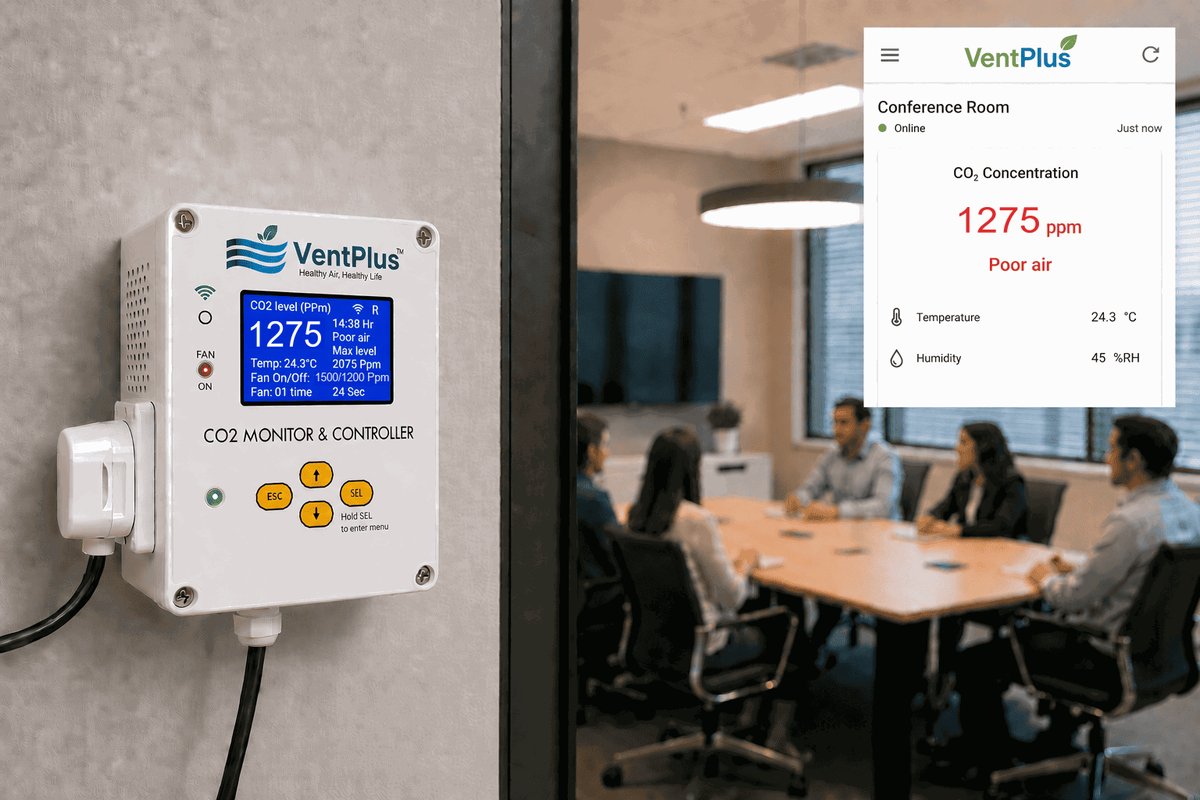
Fan ON at 1,800–2,000 ppm and OFF at 1,000 ppm suits most halls. Four front-panel keys, no software, no app.
Ventilation responds to the actual crowd — a 250-guest reception and a 40-guest lunch get different amounts of fresh air, without anyone deciding.
Between functions the fan is off. This is demand-controlled ventilation: you pay for fresh-air conditioning during the event, not through an empty Tuesday afternoon.
Multi-property operators can see every hall from one browser. The chart makes an argument that is otherwise hard to win with an owner — here is the room, here is the evening, here is where the air went bad, here is the same evening after VentPlus was fitted. Temperature and relative humidity are graphed too, because a crowded hall usually gets hot and humid at the same time as it goes stale, and all three export to Excel.
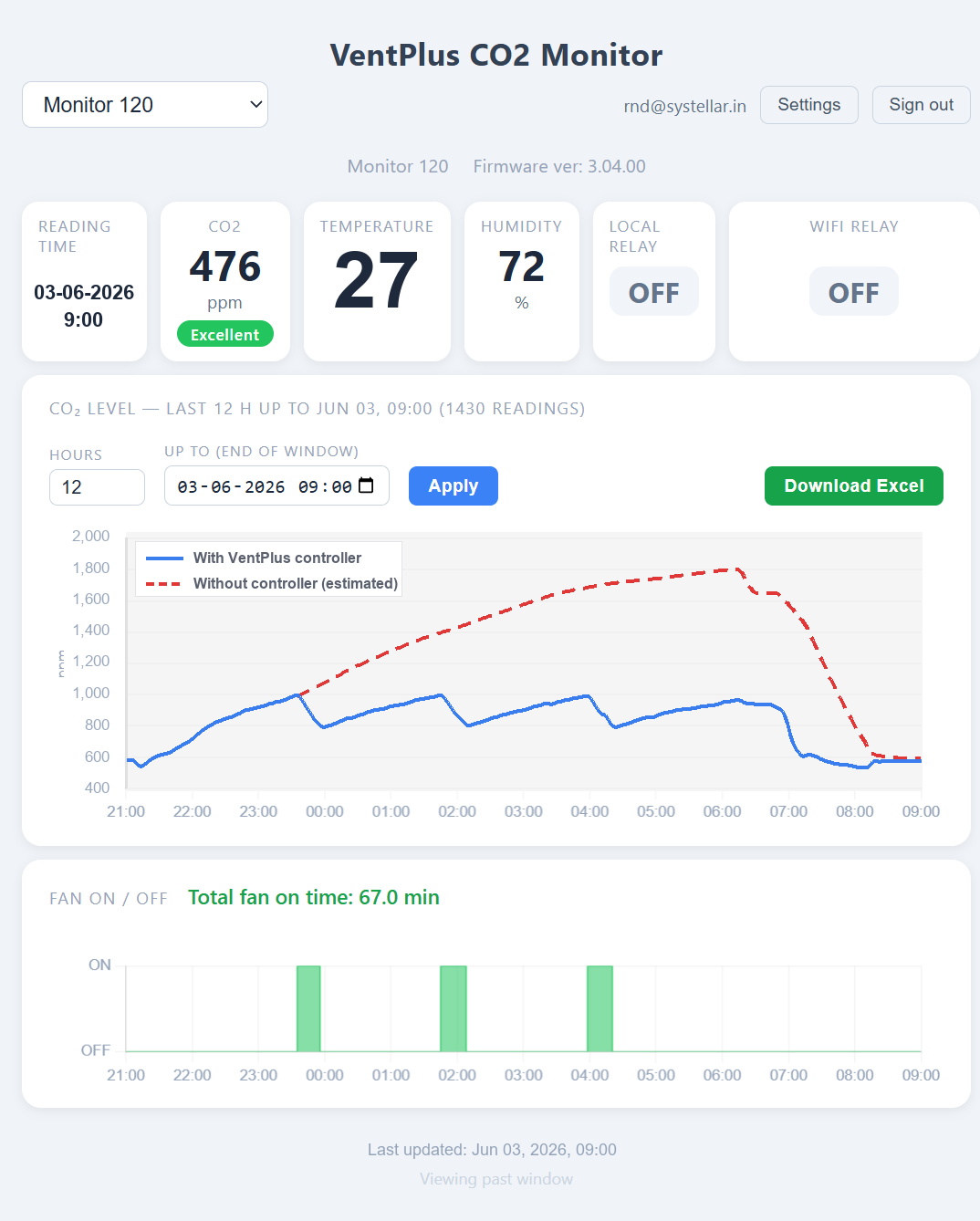
VentPlus remote monitoring website — same interface works on mobile, tablet and desktop
Want to try it yourself? Open a live VentPlus dashboard right now — no login, no signup, straight into a real device's data: live readings, plus CO2, fan, temperature and humidity graphs you can download to Excel.
Open a Live Monitoring Dashboard →Tap Open a Live Monitoring Dashboard and give it about 2 seconds to log in and load the live demo.
The measurable effects of high CO₂ on comfort and alertness are well documented. In a restaurant or a function hall they show up as shorter stays, lower spend, and reviews that mention the air conditioning.
ASHRAE 62.1 and WHO guidance both put well-ventilated occupied space at roughly 600–1,000 ppm. Above 1,500 ppm a room reads as under-ventilated; above 2,500 ppm most people describe it as stuffy without being able to say why.
ASHRAE 62.1 · WHO indoor air guidanceYour existing exhaust or fresh-air fan plugs directly into the AC socket on the unit. Bigger hall fans and AHU dampers run through a contactor. No rewiring, no electrician for a standard installation.
VentPlus Main Unit specificationThe optional Wi-Fi Relay Unit lets the sensor sit in the hall while the fan it controls sits on the roof or in a plant room — communicating over the internet, so they do not even need to share a Wi-Fi network.
WRU-700 Wi-Fi Relay UnitThe last hour of the function should feel like the first.
Common questions
Tell us the size of your hall, the guest numbers you cater for and what fresh-air or exhaust equipment you already have. We will recommend the setup and the thresholds.
or call +91 99170 80700
Downloads
Get the full VentPlus CO2 monitor & controller documentation — everything you need to evaluate, buy and install.